Summary
Goals and habits work best together: goals give you direction, while habits help you make steady progress without relying on willpower every day. Writing down your goals and planning the steps reduces your mental load and makes it easier to see whether you’re actually moving forward.
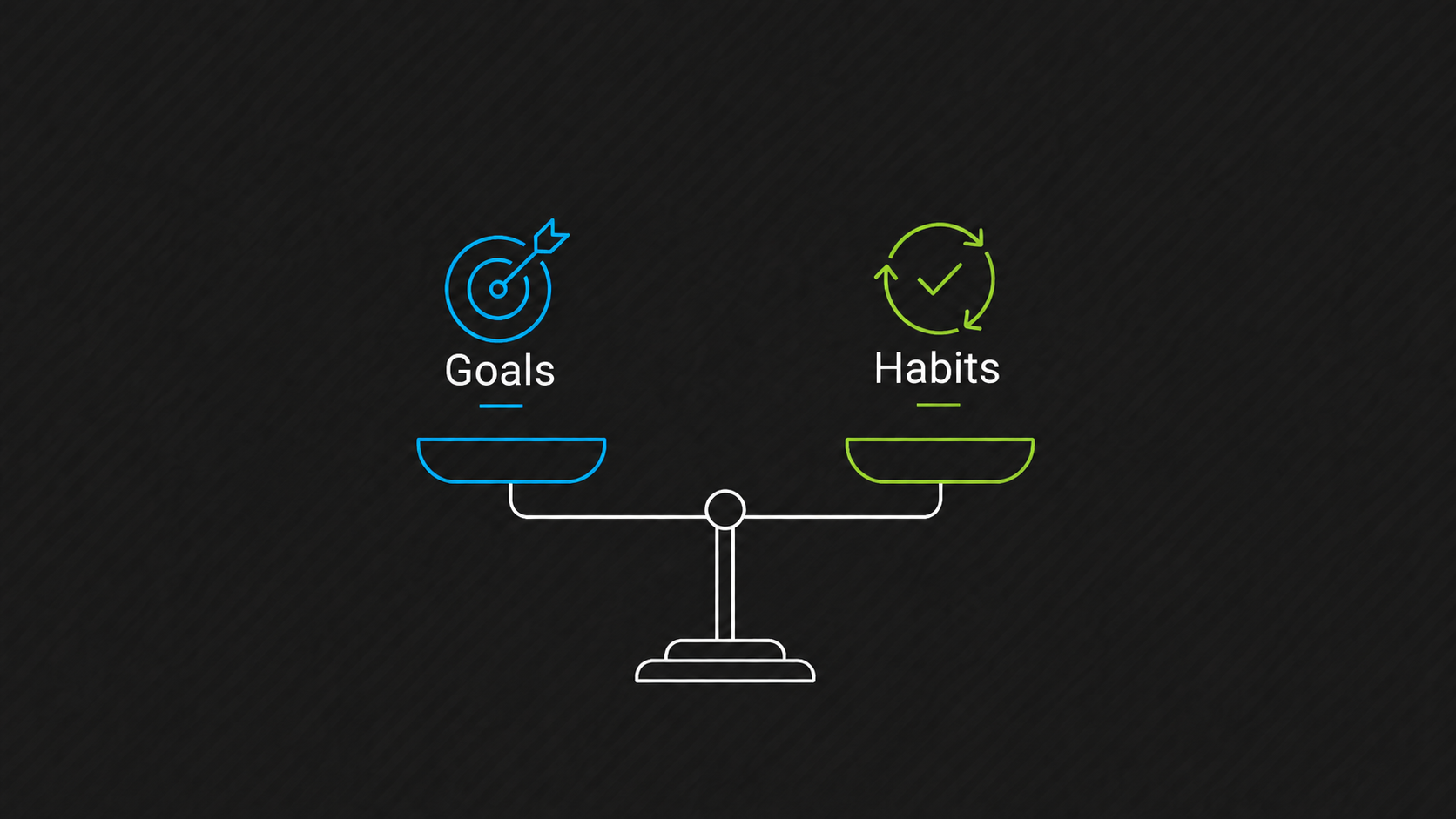
Short answer: both.
Long answer: Habits are there to enable you to be a productive person, reduce friction and reconfirm your identity. Goals are there to help you visualize an end in sight, your progress and what you’ll need to get done to achieve your dreams.
You need both and you can combine them too!
For instance, you can help build habits by setting small goals for yourself. Essentially, you want to make achieving your habits a goal. And then later on, you can use those habits to tackle the big goals you have for yourself.
Example
I want to run a marathon. But I’ll need to build up to that. So I should make a habit of running regularly. In order to see if I am actually running regularly, I set a goal for myself to run at least 2x a week. Later I can expand my habit to, for instance, 3x or 4x a week.
Mental Load: Make a schedule when you set goals
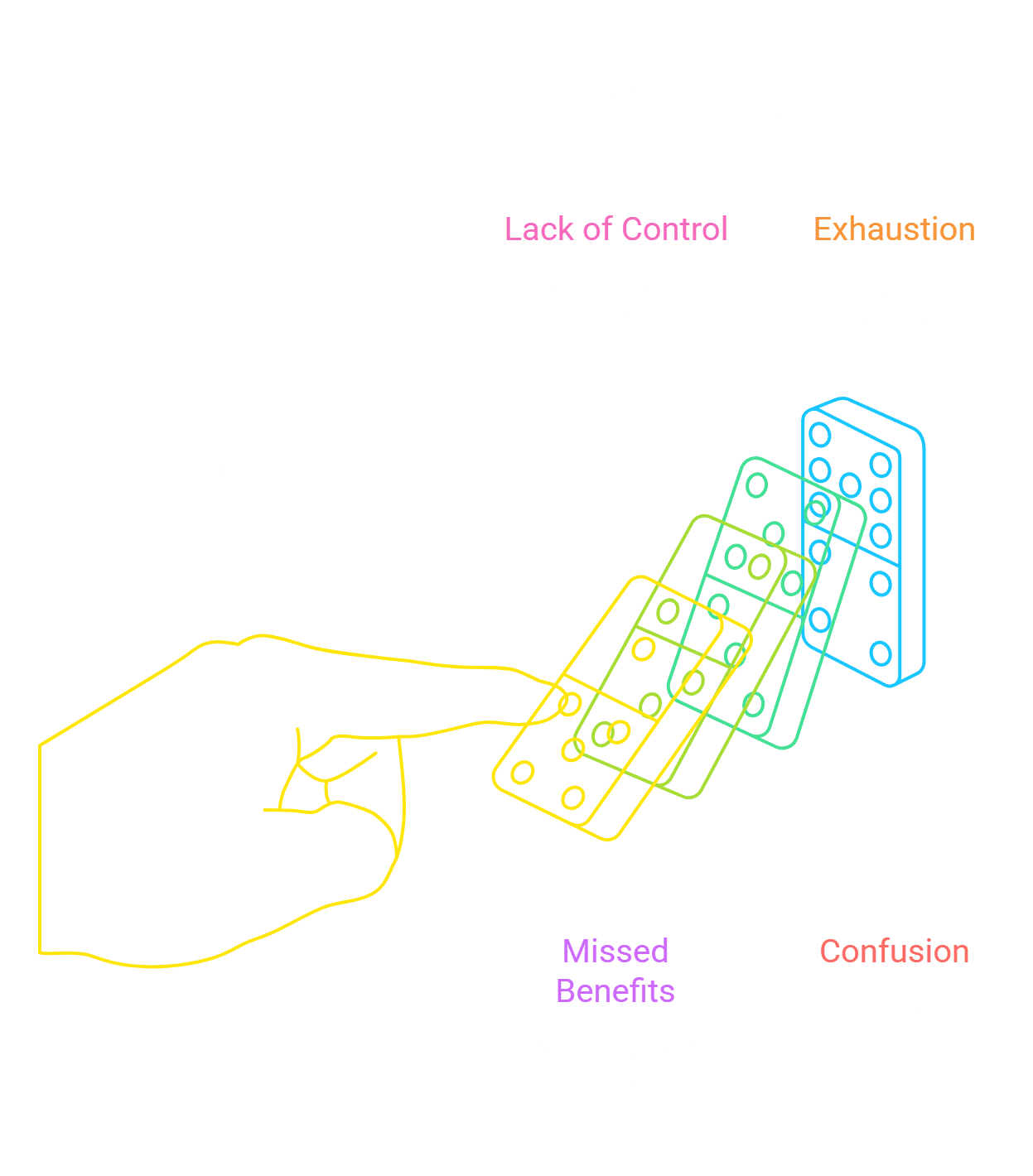
When January hits and people start a New Year's Resolution, more often than not they start without a plan. Even if you’ve got all the intention to change your life for the better, it can be mentally draining to keep thinking of everything you should or could do.
Exhausting
Keeping all your to-dos, what you're going to eat, and your plans inside of your head is just insanely exhausting. It’s called your mental load. You want to reduce it by writing down everything that comes up in your mind about what you’re going to do.
Confusing
Without a proper schedule and goals that you have concretely written out for yourself, it is hard to measure the progress you're making or to know if you’re on track.
Uncontrolled
The biggest problem with not having a schedule is that there won’t be much structure to your day. If you have to use your willpower and mental energy each day to decide what to do in order to, for instance, crush your exams, not only are you draining yourself, you are also inviting your Limbic System to put up a fight or say: “Let’s do that later and now watch TV.”
You’re Missing Out on Loads of Benefits
There are a lot of benefits to schedules and setting goals that will psychologically help you further. If you’re not convinced yet, check all the positive reasons WHY you should at the end of this chapter.
What to Do Instead
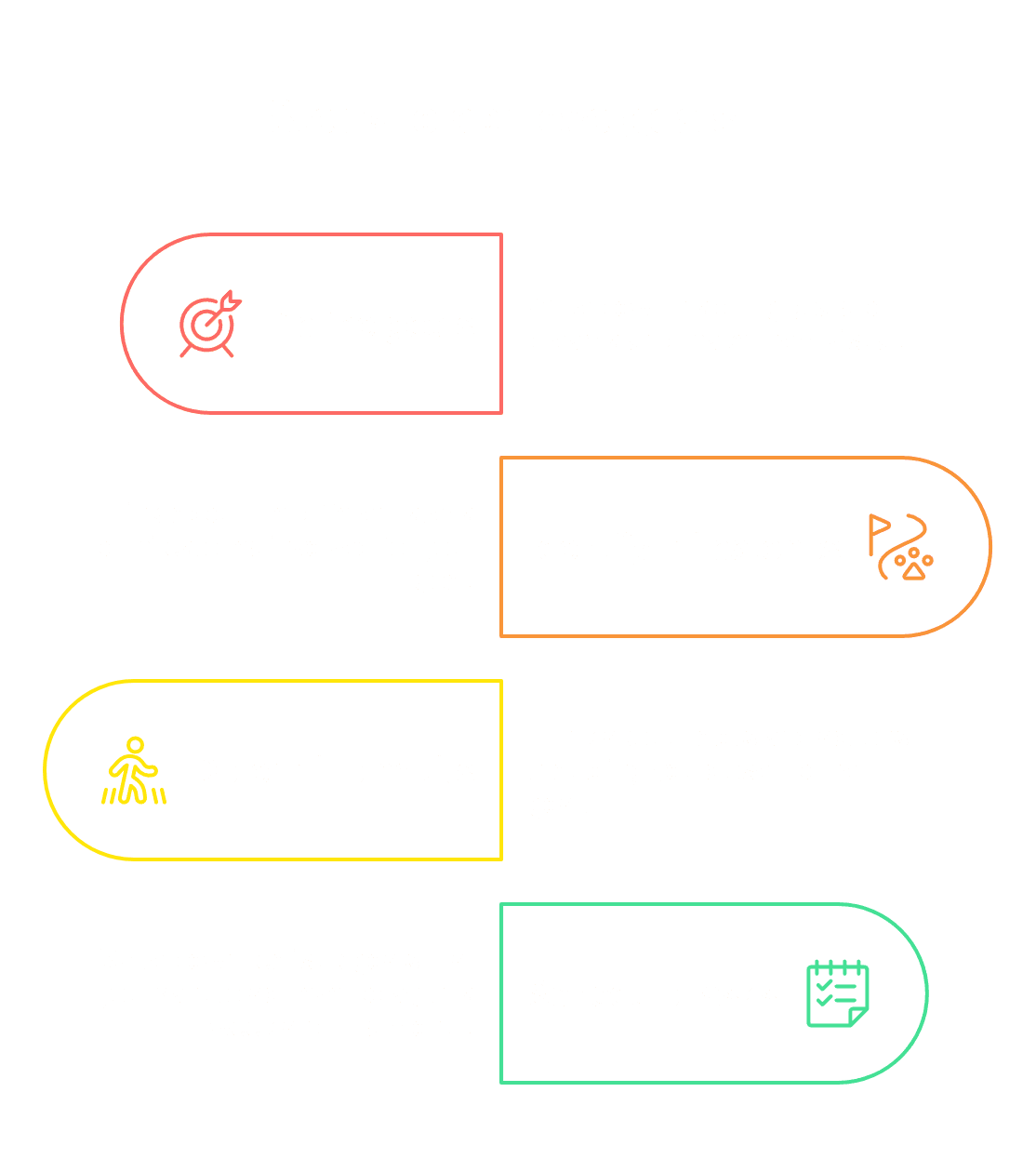
1. Write Down Your Goals or Dreams
Write down the goals or dreams that you’d like to achieve. It can range from losing weight to becoming a millionaire!
The more inspiring, the better.
Underline it, mark it, frame it, make it important and visual to you.
2. Think About the Milestones
Think about the different steps / milestones that are involved in this.
For my example: I want to be able to run a 10K. I’ll have to first complete a 2K / 3K, then a 5K, and build it up to maybe 7-8K before trying to run a 10K.
3. Think About the Habits and Actions
Think about what habits and actions can bring you just a little bit closer to that goal. For my example, I should try and run regularly. To improve my fitness, I could cycle instead of taking public transport or the car whenever possible.
Also, I should probably avoid eating too much processed food or sugar, as this will crash my energy levels and slow down my goals.
4. Set Realistic Goals
Write down the realistic goals* that you want to achieve today, this week and this month.
Today
Today I want to try running. At 17:00 I will run for 15 minutes around the block. I’ll also have an apple instead of a chocolate bar today.
This Week
This week I want to run twice more and if it’s not raining I’ll cycle to work. As a challenge, I’m going to try to eat a healthy breakfast in the morning. I’ll replace CocoPops with oats and add a piece of fruit to my breakfast bowl.
This Month
By the end of this month, I will run a 3K.
Challenge
Write down your goals and a simple schedule to achieve those long-term goals. Fill in the template.
Habit Building, Stacking and Changing
So, what are habits actually?
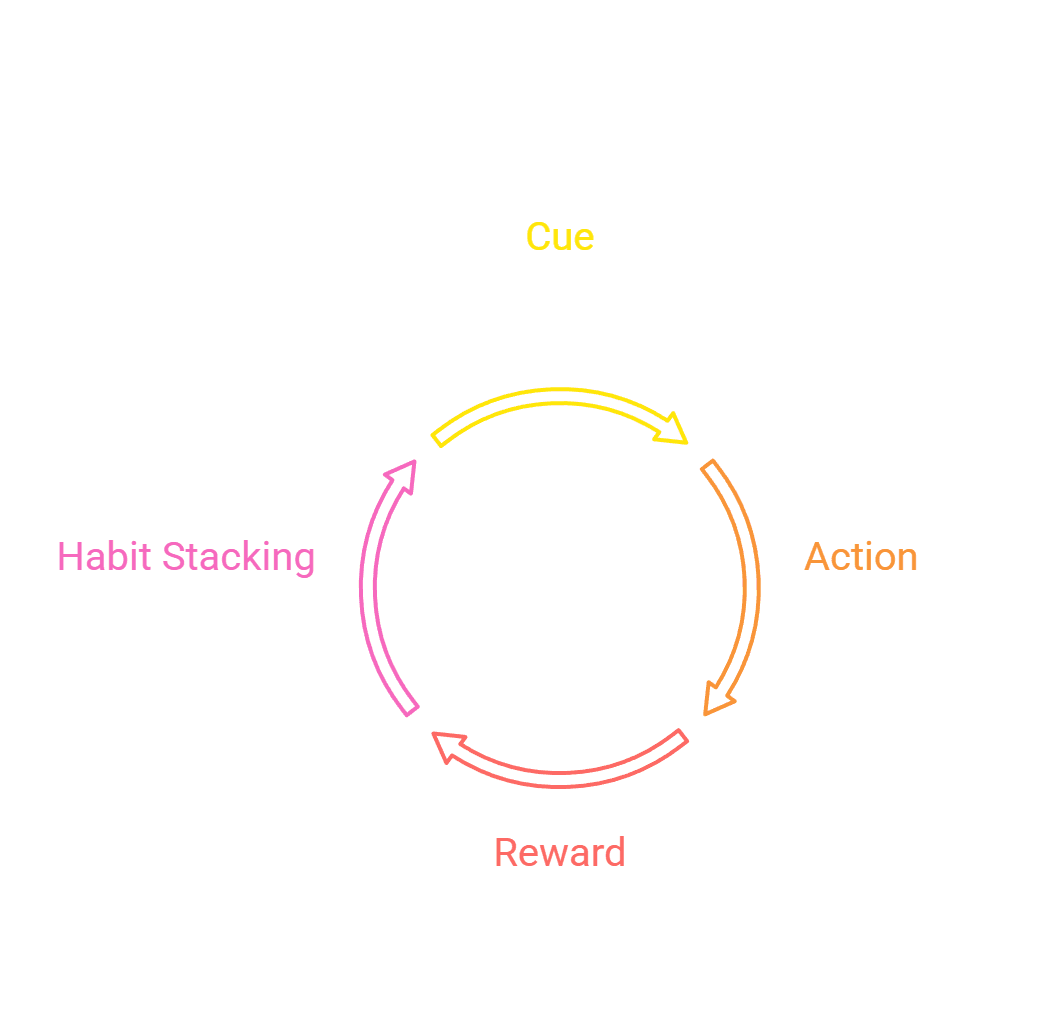
They’re a regular action performed as a reaction to a cue. They’re built up like this:
| Cue | Something that provokes the habit: Location, Time, Emotions, Event. |
| Action | This is what you do. |
| Reward | The satisfying element that makes you want to do it again next time. |
Example
You’re working and feel bored with the task at hand (cue), so you go on your phone to check social media (action) and then you get dopamine hits from your brain for the distraction (reward).
Ideally, you want to build positive habits that promote your health and save time and change the more negative ones. To start with habit building, you need to decide what your desired cue, action and reward will be. Additionally, you want to add some goal telling yourself WHY you want to build this habit.
Build Your Habit
Goal
I want to: __________________________________________Habit
For that I will need to: _____________________________In order to do this I need to build a consistent habit, so:
Cue
When: ______________________________________________Action
Then I will: ________________________________________Reward
Afterwards I get: ___________________________________
Let's Put This Into an Example
I want to (GOAL): get my work done efficiently.
For that I will need to (HABIT): avoid distractions and dopamine hits when working.
In order to do this I need to build a consistent habit, so:
When (CUE): I am bored while working on a task.
Then I will (ACTION): Stand up, stretch, take a deep breath and tell myself that
Afterwards I get (REWARD): to listen to my favourite song.
As you can see, in this example I’m not only building a habit, I’m transforming it from a negative to a positive one.
The power in habits is that once they’re built, they become an automatic process. You don’t think about consciously doing them anymore. You’ve taken away the resistance and mental effort and let your Limbic System work for you.
Habit Stacking
You can optimise this even further by habit stacking: basically, you link the end of one habit with the start of a new one. The first habit becomes the cue for the next.
After I have (HABIT 1):
I will (HABIT 2):
In Practice
After I have (HABIT 1): listened to my favourite song
I will (HABIT 2): set a timer to work for 25 minutes.
Take Control of Your Habits
We all have habits, good and bad. But successful people can change and improve their habits for the better.
Take control of your habits, don’t let them take control of you.
Challenge
Fill in the two sheet cards and try to apply these habits the next time the cue arises.
Find this useful?
Support the blog or follow me for more daily tips.
Summary
Goals and habits work best together: goals give you direction, while habits help you make steady progress without relying on willpower every day. Writing down your goals and planning the steps reduces your mental load and makes it easier to see whether you’re actually moving forward.
Find this useful?
Support the blog or follow me for more daily tips.